
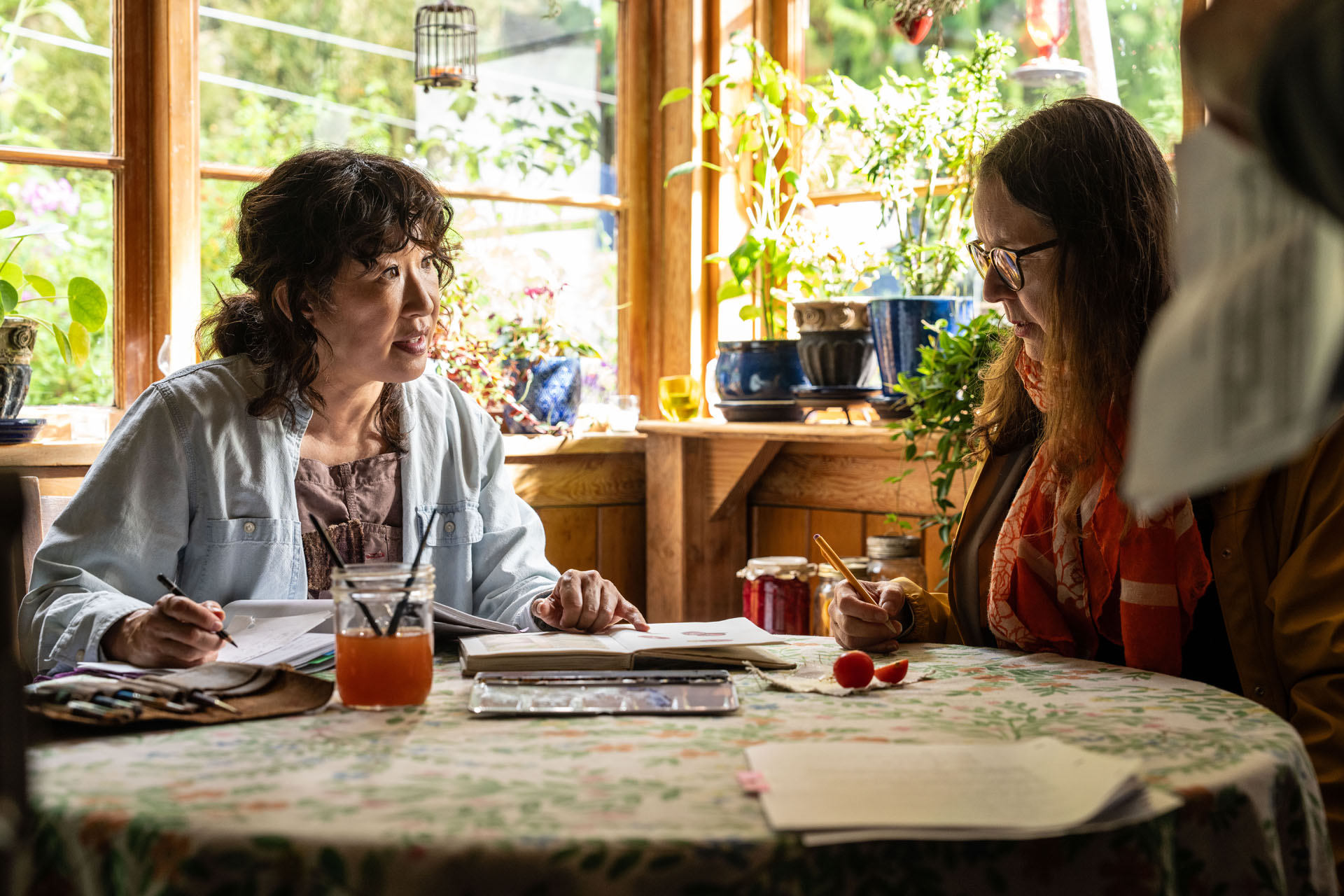
Props are individual objects that populate the environments created within a film set. But rather than being background items that decorate the space, a prop is activated through performance and serves a purpose within the story, revealing a character’s personality, history, values, or emotional state. They are extensions of characters and define relationships, signal status, or reveal inner worlds. For example, a character carrying a scuffed backpack is different from a character carrying a locked briefcase.
As storytelling instruments, they range from the most obvious (a drawn weapon, a worn heirloom about to go missing, a dropped journal about to be picked up by the wrong person) to the least obvious (a novelty mug, a handwritten note, a sweater three sizes too big, a party hat, or an unfinished canvas painting).
Props are touched, carried, gifted, hidden, stolen, or broken; at the same time, they create continuity and logic within the film’s world (for example, a glass that is half full in one shot but remain the same in the next, a clock in the background should not go back in time). Their active participation in the story means they can make or break our immersion, as their use or misuse carries consequence and tracks time. You might hope audiences will miss these details, but even when unnoticed, they’re felt.
The Props Department
The Props Department is responsible for every object a performer touches or interacts with on screen. If a character carries it, uses it, or manipulates it in any way, it falls under the care of props. Working at the intersection of design, craft, and logistics, this department sources, builds, modifies, tracks, and maintains all props throughout production.
Their work begins well before the cameras are rolling, in pre-production. They carefully read the scripts to identify every required item, from the smallest personal belonging to complex pieces. Collaborating closely with the Production Designer, Set Decorator, Director, and Performers, they ensure that each prop aligns with the visual world and supports the needs of the scene, as well as provide insight and expertise. On set, they prepare the props for each day of shooting, ensure everything is in its place at the right time, and stand by for adjustments as performances and blocking evolve.
Behind the scenes, the department manages storage, transport, and continuity, tracking where every object belongs, how it appears, and how it changes over time.
Key Roles in the Props Department
The Props Department can operate as part of the broader art department, translating the creative vision into physical objects that performers can bring to life. The size of this team is dependent on the needs and complexity of a particular set and script.
Creative & Supervisory Roles
Property Master (Prop Master): The head of the department. They interpret the script, identify all prop requirements, and oversee sourcing, fabrication, budgeting, and scheduling. They work closely with the Production Designer, Set Decorator, and Director to ensure every prop fits the story’s world and tone.
Assistant Property: Supports the Prop Master in coordinating logistics, managing schedules, tracking inventory, and ensuring daily readiness for shooting.
Technical & Hands-On Roles
Lead Props Person: Leads the on-set props team, ensuring all items are prepped, placed, and ready for action. They supervise handling during filming and coordinate resets between takes.
Prop Person (Props): Works directly on set, placing props, handing them to performers, maintaining continuity, and making adjustments as scenes unfold.
Prop Maker: Designs and fabricates custom props when items cannot be sourced. Their work can range from simple modifications to highly specialized builds requiring carpentry, sculpting, or mechanical skills.
Support & Logistics Roles
Props Buyer: Sources and acquires props, balancing creative needs with budget and availability. They research historical accuracy, locate specialty items, and negotiate rentals or purchases.
What It Takes
Working in props requires a unique blend of creativity and practicality. Craftsmanship, problem-solving, and adaptability are essential, as no two days or requests are ever the same. One moment might involve sourcing a period-accurate object, the next might involve repairing a broken prop minutes before cameras roll.
A strong understanding of storytelling is key, along with historical knowledge, attention to detail, and excellent organizational skills. Since the role often involves handling large or delicate items, physical coordination, attention to detail, and logistical planning are equally important. Specialized skills such as working with materials, fabrication techniques, or even firearms safety (where required), may also be part of the job, depending on the production.
To learn more about joining requirements, contact ACFC West and IATSE 891.
Why It Matters
Props allow characters to interact with their world in tangible ways, making emotions and actions feel immediate and believable. A well-chosen prop can create a memorable moment or even define the entire film. Think of the the ring in LORD OF THE RINGS, Katniss’s mockingjay pin, the spinning totem in INCEPTION, or McLovin’s driver license. They can become iconic and elevate the whole film. But even when they’re subtle, props shape how audiences understand and perceive characters, time, and place.
By supporting performance, maintaining continuity, and reinforcing the film’s visual language, the Props Department helps bring stories to life in a way that feels natural and immersive.
Image credit: CAN I GET A WITNESS? (2024, dir. Ann Marie Fleming)